The benefits of meditation for children- Getting little people to sit still
The benefits of meditation for children are as numerous and profound as they are for adults.
Meditation is not an activity we would usually think of for a child. Children are rarely naturally still. It is true that they benefit from exercise and physical activity, especially when done outside. However, meditation can also be a great tool in supporting positive mental health and combating anxiety.
What age can children meditate?
Children can meditate from as young as three or four years of age. In fact, as soon as a child can sit still for a few minutes, you can begin to introduce them to meditation.
For younger children, they may prefer short meditations. A child’s ability to focus increases with age. Therefore, older children will be able to focus for a little longer.


Are meditation and mindfulness the same thing?
Although you can not use the words meditation and mindfulness interchangeably, they are closely connected.
Meditation is a practice that focuses on calming the mind, either by taking a mental rest or focusing on a particular thought that you believe will bring you benefit.
Mindfulness is cultivating awareness of our bodies, minds and emotions.
You can use mindfulness as a tool for meditation, and meditation helps to increase our mindfulness. Therefore, when we talk about the benefits of meditation for children, we will also be looking at the benefits of mindfulness. Children who meditate will, over time, become more mindful.
What does meditation do to your child’s brain?
Meditation can actually change the structure of the brain. The journal, Psychiatry Research, published a study where researchers asked participants to practise Mindfulness-Based Stress Reduction for 8 weeks. By the end of the study, they found that the hippocampus had grown. The hippocampus is the part of the brain in charge of memory and emotional regulation.
They also found that the amygdala, which is connected with stress and anxiety, was smaller after repeated mindfulness practice.
What are the benefits of meditation for children?
Meditation has many benefits for children. Let’s explore them
Reduced anxiety
Meditation and mindfulness can help children cope with anxiety. If your child meditates regularly, they may feel less anxious overall.
Better emotional control
By bringing children into the present moment, meditation can help your child to slow down and be aware of their emotions. In a more reflective state, your child will be in a stronger position to make good choices.
Improved Sleep
There is evidence that regular meditation may improve sleep quality. Furthermore, sleep meditations are a great way to get children to settle at night. Here is a list of some fantastic sleep meditations to get you started.
More focus
Mindfulness can help your child develop the ability to focus on a task and give their full attention. There are three major neurological networks for focus and attention. Different studies have shown that meditation can impact different networks depending on the practice.
Higher academic achievement
Children who meditate regularly have been shown to perform better at school and achieve better grades. This may be due to lowered levels of stress and improved focus.

Boost in social skills
Loving-kindness meditation is a type of meditation that can help boost positive feelings, compassion and empathy for other people.
Although studies looking at the effects of other kinds of meditation on prosocial behaviour have yielded mixed results. However, meditation does support impulse control and self-awareness. These are both skills which can help your child to flourish socially.
Increased immunity
So far, many of the benefits of meditation for children that we have discussed have focused on the mental benefits. However, meditation can help your child physically, too. Studies have shown a link between meditation and a stronger immune system.
Greater confidence
By helping your child ground themselves and become more self-aware, meditation can have a positive impact on their confidence levels.
More creativity
As we have already discussed, meditation can support emotional regulation and reduce anxiety. A positive side effect of this is that it offers the mind more creative freedom. Also, the improvement in cognitive function that meditation provides can enable the mind to make more connections, and think out of the box.
How to get your child meditating
A lot of adults struggle to meditate. Our minds aren’t used to staying still. It often doesn’t feel natural. It is not any easier for children. Despite the many benefits of meditation, children are likely to struggle to begin with.
The great news is that meditation is something that is adaptable. There are many ways that you can include meditation into your child’s day.
Start small
Asking your four-year-old to sit and chant mantras for an hour may be ambitious. Young children have limited attention spans and often find being still difficult.
Therefore, it is important to start small and manageable. Make it short and interactive. If you manage to make it fun, there are bonus points.
Teach them breathing techniques
The great thing about breathing techniques is they can be done anywhere. They are a great way for your child to calm down if they are having big feelings.
Here are some breathing techniques you can try today.
Try a guided meditation video on YouTube
YouTube has a plethora of meditation videos that are specifically designed for children. They are often short and easy for children to follow.
Talk them through a body scan
Body scans are a great way to help your child be more self-aware and in the moment. Start with the feet and ask them to focus on each part of the body in turn.
This can be adapted at bedtime. If your child tightens and then relaxes each part of their body in turn, it can help them to settle down ready for sleep.
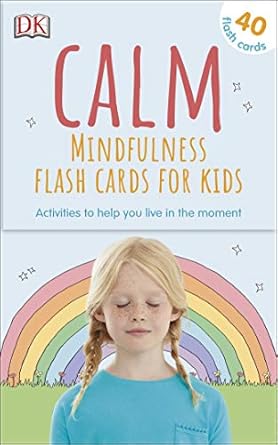
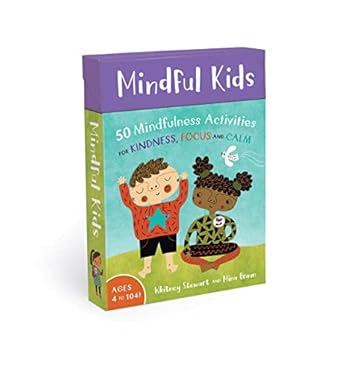
Invest in some meditation cards
Meditation cards are a great tool to help your child fall in love with meditation. Each card has a different mindfulness or meditation activity to try. They are fun, and having the option to choose their card for the day, can help your child to feel proactively engaged in the process
Add a sleep meditation to bedtime
Sleep meditations can help your child shut off their busy brains and fall into a deep sleep.
There are different types of sleep meditation, such as music or stories. So, try a few and find which one your child loves.
Make it part of your daily routine
When you add meditation to your daily routine, it will be easier to remember to do it regularly. When you fit it in depends on what works for your family. For example, first thing when you wake up, before you walk out for school, or before bed are all great options.
A final note
Meditation has a lot of benefits for children, and also for you. Therefore, as you encourage them to meditate, use the time to look after yourself also.
I wish you all the peace,
Hannah Louise
References
“Benefits of Meditation for Kids.” NEW HORIZON, 2018, www.newhorizonholisticcentre.co.uk/blog/benefits-of-meditation-for-kids. Accessed 16 Sept. 2025.
Bennett, Doug. “Meditation Brings Robust Immune System Activation, UF Health Researchers Find.” UF Health, University of Florida Health, 14 Dec. 2021, ufhealth.org/news/2021/meditation-brings-robust-immune-system-activation-uf-health-researchers-find.
Ding, Xiaoqian, et al. “Improving Creativity Performance by Short-Term Meditation.” Behavioral and Brain Functions, vol. 10, no. 1, 2014, p. 9, https://doi.org/10.1186/1744-9081-10-9.
Feruglio, Susanna, et al. “The Impact of Mindfulness Meditation on Social and Moral Behavior: Does Mindfulness Enhance Other-Oriented Motivation or Decrease Monetary Reward Salience?” Frontiers in Integrative Neuroscience, vol. 16, 2 Sept. 2022, https://doi.org/10.3389/fnint.2022.963422.
Garey, Juliann. “The Power of Mindfulness.” Child Mind Institute, Child Mind Institute, 2 Feb. 2016, childmind.org/article/the-power-of-mindfulness/.
Gomes, Alexandra, et al. “Meditation Effects on Anxiety and Resilience of Preadolescents and Adolescents: A Randomized Controlled Study.” Children, vol. 8, no. 8, 11 Aug. 2021, p. 689, https://doi.org/10.3390/children8080689.
Moore, Lela. “How Meditation Changes the Brain.” Psych Central, 3 June 2021, psychcentral.com/blog/how-meditation-changes-the-brain.
Norris, Catherine J., et al. “Brief Mindfulness Meditation Improves Attention in Novices: Evidence from ERPs and Moderation by Neuroticism.” Frontiers in Human Neuroscience, vol. 12, no. 315, 6 Aug. 2018, www.ncbi.nlm.nih.gov/pmc/articles/PMC6088366/, https://doi.org/10.3389/fnhum.2018.00315.
Priya. “The Impact of Meditation on Academic Performance and Cognitive Abilities.” IJFMR240215225, vol. 6, no. 2, 2024, www.ijfmr.com/papers/2024/2/15225.pdf.
Ross, Michele. “Nope, Mindfulness and Meditation Aren’t the Same Thing. We Asked Experts to Break down the Difference.” @Onepeloton, Peloton Interactive, 28 Feb. 2024, onepeloton.com/blog/mindfulness-vs-meditation. Accessed 15 Sept. 2025.
Rouse, Matthew, and Alnardo Martinez. “How Can We Help Kids with Self-Regulation?” Child Mind Institute, 2016, childmind.org/article/can-help-kids-self-regulation/.
Rusch, Heather L., et al. “The Effect of Mindfulness Meditation on Sleep Quality: A Systematic Review and Meta-Analysis of Randomized Controlled Trials.” Annals of the New York Academy of Sciences, vol. 1445, no. 1, 21 Dec. 2018, pp. 5–16, www.ncbi.nlm.nih.gov/pmc/articles/PMC6557693/, https://doi.org/10.1111/nyas.13996.
“Sleep Meditation for Kids: Promoting Peaceful Nights and Restful Sleep.” Huckleberry, huckleberrycare.com/blog/sleep-meditation-for-kids-promoting-peaceful-nights-and-restful-sleep.
Weare, Katherine. Evidence for the Impact of Mindfulness on Children and Young People Mood Disorders Centre. 2013.